
How valuable is an hour of wellness?
Dynamic pricing as a strategic decision to increase profitability
In Latin America’s contemporary wellness economy, time is the most valuable resource. Every hour represents a unique opportunity to generate value, experience, and profitability. Understanding this opens the door to a new way of operating wellness businesses.
Since the late 1970s, the service industry has evolved toward models that assign value based on timing, demand, and convenience. This vision led to the emergence of revenue management, a discipline that transformed sectors such as hospitality, private healthcare, and luxury by recognizing that not all moments generate the same value. In the wellness industry, the most important inventory is time. An unsold minute in a treatment room or an empty yoga mat represents revenue that is lost forever. In this context, RevPATH, Revenue Per Available Treatment Hour, emerges as a metric that measures the value generated by each available hour of treatment, treatment room, therapist, and available space.
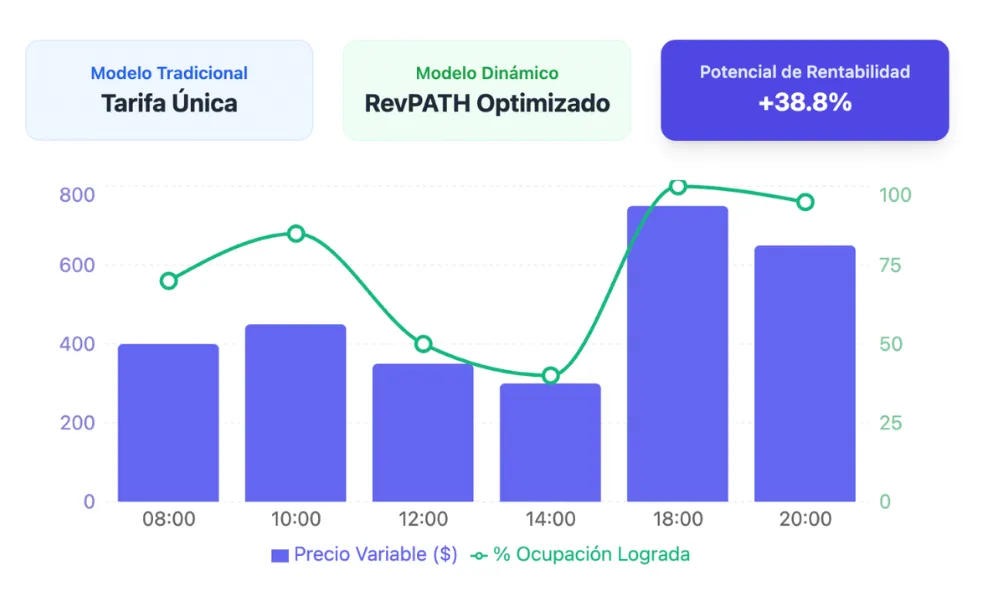 Adopting variable pricing is a strategic design decision that aligns operations with actual demand patterns. Implementing dynamic pricing is not merely ‘raising costs’, but about expanding access while optimizing infrastructure use. By recognizing different flows throughout the day, wellness businesses can better distribute demand, optimize capacity, and offer a more seamless experience for both guests and operators.
The greatest strength of this strategy is margin optimization. It allows businesses to capture willingness to pay during peak hours and improve off-peak hour utilization by up to 32% through pricing incentives. Studies from Cornell University indicate revenue increases of 10% to 12% during the first year, as well as billing growth of up to 20% and significant increases in new customers.
Today’s opportunity lies with Millennials and Gen-Z, who value flexibility and digital transparency. Adjusting supply to the pace of the market allows for the creation of more  sustainable and future-proof wellness models. If you have a wellness business and want to create value, remember that every hour counts.
By Carmelina Montelongo
Founder and CEO, SiSi Atelier
www.sisistudio.com.mx
Digital Transformation
How Integrated Systems Optimize Spa Revenue Streams
The spa and wellness industry is entering a new era, one where financial performance is directly tied to digital maturity. Demand is strong. Guest expectations are higher than ever. But profitability? That’s being determined behind the scenes by how well your technology ecosystem works together. Too many spas are still operating with disconnected systems: one for bookings, another for POS, another for inventory, another for memberships. The result isn’t just operational friction. It’s lost revenue, missed yield opportunities, reporting blind spots, and teams spending time reconciling numbers instead of driving growth. Digital transformation isn’t about adding more tools. It’s about integration.
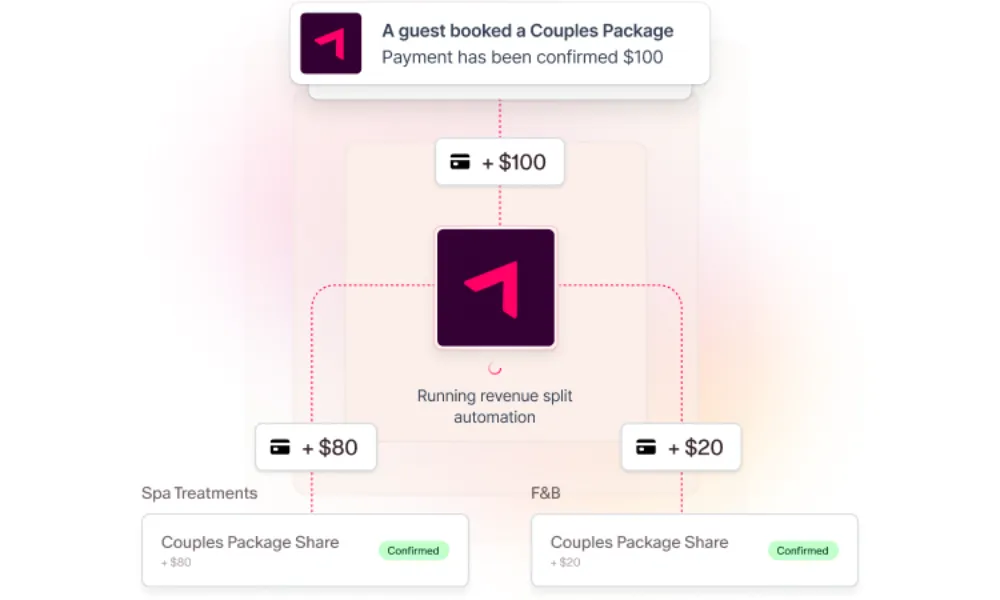
When scheduling, retail, memberships, activities, and PMS integrations operate within a connected framework, spa leaders gain something powerful: real-time visibility. Occupancy trends. Therapist utilization. Package performance. Retail attachment rates. Forecasting clarity. That visibility shifts decision-making from reactive to strategic. Integrated systems also unlock modern revenue levers. Dynamic pricing protects the margin during peak demand. Intelligent packaging drives higher average spend. Automated memberships create predictable recurring revenue. Inventory alignment reduces waste while increasing retail profitability.
And the guest journey? It becomes seamless. Frictionless booking. Digital intake. Secure access. Effortless cross-charging across resort touchpoints. Operational efficiency becomes part of the luxury experience. Financial wellness isn’t just about cutting costs; it’s about building smarter revenue streams. As our industry evolves, the most successful spa  and resort leaders will be those who treat technology not as an expense line, but as a strategic growth engine. Because in today’s market, integration isn’t optional. It’s a competitive advantage.
By Sal Capizzi
Senior Vice President, Growth & Marketing, Trybe
www.try.be

Pricing and Profitability Strategies for Wellness Experiences
How to design pricing strategies that reflect the true value of wellness experiences, integrating profitability, purpose, and operational excellence
In the growing wellness industry – especially in spas, spa resorts, and among professionals dedicated to holistic care – there is a constant challenge: finding the strategic balance between profitability and the true value of services offered.
Wellness experiences must be firmly backed by quality, consistency, and tangible guest benefits. Only then can recognition, trust, and long-term loyalty be built. In this industry, price is not an isolated number: it is an expression of the value that guests perceive and are willing to pay based on their needs, desires, and the impact of the offering.
A conscious analysis of the competition and clarity regarding the segment each service targets provides an objective perspective for decision-making. However, profitability is not solely linked to price. It is closely related to strategic revenue management, which involves factors such as average transaction value, productive occupancy of spaces, schedule optimization, and the performance of each experience offered.
While costs must be monitored and controlled, the main focus should be on productivity with excellence. Not all services play the same role: some improve brand positioning, some generate flow, and others deliver direct profitability. Understanding this dynamic allows for the design of sustainable, authentic, and aligned wellness offerings.
Today, the real challenge for leaders and wellness managers is not to charge more or compete on price, but to dare to design meaningful experiences, measure their impact, and sustain them with strategic intelligence. When price is born of value, profitability ceases to be an isolated goal and becomes a natural consequence of doing things right. Thinking  about wellness with vision, consistency, and courage is the final invitation: elevate the experience, honor the guest, and build businesses that thrive over time without losing their essence.
By Gabriela Gergic
Founder and Director, Cielo y Tierra Spa
www.cieloytierraspa.com