An Introductory Conversation with Informa Connect
Moderated by: Nancy Davis, Chief Creative Officer & Executive Director, Global Wellness Summit and Global Wellness Institute, United States
Andrew Mullins, CEO, Informa Connect, United Kingdom
Doreen Brown, CEO, Informa Medical, United States
Following Informa’s acquisition of the Global Wellness Summit (GWS) and the Global Wellness Institute (GWI) in September 2026, this conversation outlined how the global events company plans to take both organizations, along with their events and research, to the next level. Informa runs events across almost every sector, but Andrew said he sees longevity and wellness as the most exciting space. Preventive medicine is critical and benefits everyone, which is why this is of such interest to the company.
Doreen described longevity and wellness as complementary concepts that sit naturally within Informa’s medical portfolio. Built on a foundation of science and education, the newly formed Global Wellness Group will oversee the Summit, its events, and its research, with the aim of becoming a respected global resource whose thought leadership draws audiences and builds communities.
Andrew explained that Informa Connect has annual revenues of around £4.5 billion and approximately 1,500 employees, and generates strong cash flow that it reinvests in building and acquiring new businesses. “We want ambitious people who want to create something new,” he added.
KNOWLEDGE WORKSHOPS
Introduced by: Heidi Moon, Chief Marketing Officer, Global Wellness Summit and Global Wellness Institute, United States
Breath, Biology & the Art of Delivery
Sponsored by NADclinic
Moderated by Erin Lee, Co-Founder & CEO, NADairX Ltd., United Kingdom
Speakers:
Alexander Audette, DAc, TCMP, Chief Science Officer, NADclinic, Japan
Iain De Havilland, Founder & CEO, NADclinic Group, United Kingdom
Panos Papadiamantis, Co-Founder & CPO, PNOE, United States
Erin Lee of NADairX opened the panel by explaining that today’s guests want more than a spa treatment; they are looking for wellness, longevity, recovery, better sleep, and performance.
Panos Papadiamantis of PNOE explained that PNOE can now carry out a baseline assessment of overall health by measuring 23 biomarkers, including VO2 max, which is widely regarded as one of the strongest predictors of longevity. With PNOE’s equipment, wellness practitioners can measure how much oxygen a client consumes and how much CO2 they produce, giving insight into the cardiovascular and pulmonary systems, as well as cellular metabolic function. Breath analysis is a simple functional assessment that can help flag certain issues, which makes it ideal for short-stay settings.
Alexander Audette of NADclinic said that NAD (nicotinamide adenine dinucleotide) is central to cellular health. Because it is involved in mitochondrial function, DNA repair, circadian rhythm, immune function, epigenetics, inflammation, and cell division and survival, a decline in NAD levels, which happens naturally with age, affects multiple systems in the body.
NADairX is a new system that delivers NAD by inhalation. Oral delivery has the lowest absorption rate and IV delivery the highest, while pulmonary delivery hits the sweet spot: high absorption with an easy method of delivery, as the lungs’ rich blood supply allows rapid uptake. Alex believes this route will become increasingly popular for many supplements.
Global Wellness Summit 2026: Day One
Royal Opening of the 20th Global Wellness Summit
Her Majesty Queen Suthida Bajrasudhabimalalakshana, Queen of Thailand
Introduced by:
Jiří Dvořák, MD, PhD, 2026 GWS Co-Chair; Professor of Neurology, Schulthess Clinic Zurich & BDMS Wellness Clinic; Former Chief Medical Officer, FIFA; Switzerland
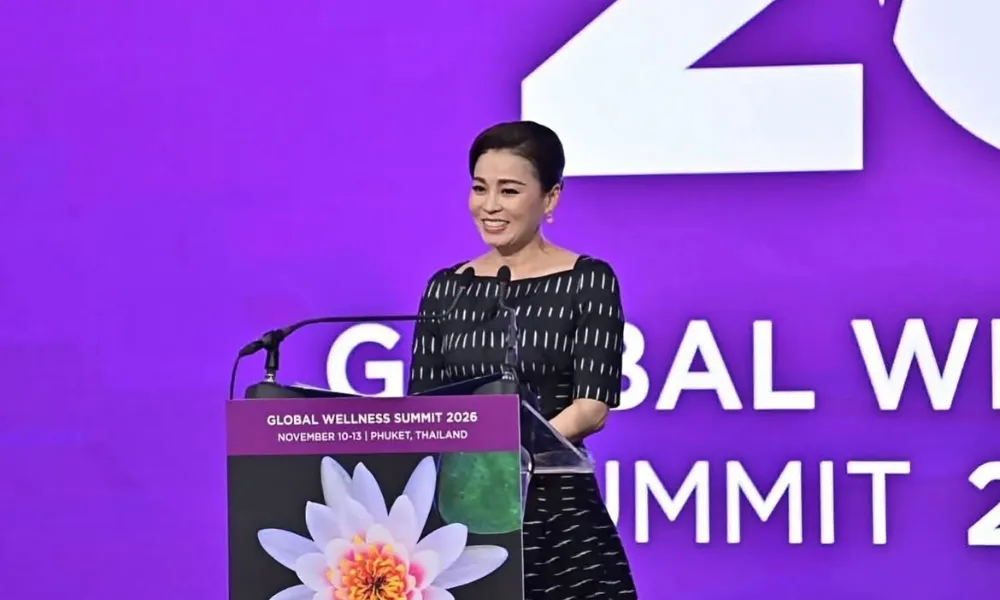 Her Majesty Queen Suthida Bajrasudhabimalalakshana of Thailand officially opened the 20th-anniversary Global Wellness Summit. The Thailand-based summit, under the theme The Science, Art and Soul of Wellness, fits well with Thailand’s wellness culture. More than 600 thought leaders, experts and investors from around the world filled the room for a ceremony that combined royal protocol, national ambition and a surprisingly personal message.
The morning followed formal royal protocol. The opening address framed the summit as part of Thailand’s national strategy to become a global hub for sustainable wellness tourism and to put Phuket on the map as a leading international wellness destination. A video on Thailand and the future of wellness followed, then the Royal Address, a visit to the summit exhibition and a group photograph with the organizers.
The Queen’s address:
Her Majesty’s words were warm and personal. Well-being, she said, is about more than the absence of illness. It is about how we live, move, eat and think, how we care for one another, how we connect with nature and how we find balance. In Thailand, these ideas are part of daily life: Thai massage, herbal medicine, nourishing food, meditation and movement are not simply ‘wellness practices’ but heritage.
She spoke about how much physical well-being means to her and how movement, discipline and challenging herself have strengthened not only her body but her mind and spirit. Then came the line I wrote down twice: “Wellness is not something we simply receive. It is something we practice.”
She welcomed delegates and invited them to experience the warmth of Thai hospitality and care, and reflected on the theme: science helps us understand how to live healthier lives, art reminds us of creativity and beauty, and soul reminds us that true well-being includes our relationships with one another, our communities and the world around us. With that, she declared the 20th Global Wellness Summit open.
Welcome to the Science, Art & Soul of Wellness
Nancy Davis, Chief Creative Officer & Executive Director, Global Wellness Summit and Global Wellness Institute, United States
As MC of the plenary sessions, Nancy Davis set the tone. This year’s theme, The Science, Art and Soul of Wellness, captures her view of where the industry is heading: none of these pursuits is enough on its own. As Nancy put it, “It’s in combination that magic happens.”
She reminded delegates that 20 years is long enough for an idea to become an institution. Before there were 20 summits to look back on, there was simply a belief that this industry needed a place to think together. She invited each of us to consider our own place in that story: the possibility we saw and the decision we made because this community existed.
For her final introduction of Susie Ellis as chair and CEO, Nancy chose numbers over words: a video measuring Susie’s impact on the industry, a fitting tribute to a leader who loves data.
20 Years, What We’ve Accomplished, What Lies Ahead
Susie Ellis, Founder, Chair & CEO, Global Wellness Summit and Global Wellness Institute, United States
Susie admitted that legacy has never interested her much; she prefers to look forward. So instead of looking back, she shared the achievements, values and influences that she believes can keep shaping the future.
The achievements
• The ‘Davos of Wellness.‘ The summit began as an idea after Susie attended the World Economic Forum twice and fell in love with its format and mission. Twenty years on, it has become a global force.
• Research. From the beginning, GWS invested in a research team to measure what was first the spa economy and soon became the wellness economy. The Global Wellness Economy Monitor and its famous bubble chart remain at the heart of the organization’s work, free to download and quoted by media, governments, consultants, CEOs and academics worldwide.
• What comes next in research. Medicine and wellness are moving closer than ever, and ‘longevity’ now carries countless definitions. One of Susie’s last recommendations before she departs at the end of the year: a global study, starting next year, on the convergence of medicine, wellness and longevity.
• A bigger platform. This year the Global Wellness Summit and the Global Wellness Institute became part of Informa, the UK-headquartered events and research group. Susie said she was ready to step back only if the organizations she founded found a good home, and they have. She has passed the baton to Nancy, who will lead the new chapter with the entire team.
The six values
• Global. Twenty summits in twenty places. Staying in one location would have been easier, but this had to be a global conversation, learning from countries and cultures around the world. “Every one of them is like one of my children.”
• Future-focused. From the annual wellness trends forecast each January to landmark research: wellness tourism (introduced at the 2013 summit in India) and the 2018 Wellness Real Estate and Communities report, which identified what is now the fastest-growing sector of the global wellness economy.
• Collaboration. Countless business deals and new companies have grown out of summit conversations, as well as unusual partnerships, including Resetting the World with Wellness, a series of white papers for the Vatican during COVID, and BBC StoryWorks’ series In Pursuit of Wellness.
• Evidence-based. In 2011, at the summit in Bali, GWS launched wellnessevidence.com, making studies on the worth of wellness modalities easy to find. Dr. Ken Pelletier and Beth McGroarty, two of the minds behind it, are still involved.
• Agility. Political and global challenges forced short-notice pivots: Hong Kong to Singapore in 2019, Tel Aviv to Palm Beach in 2020 (a safe summit before vaccines existed), and Qatar to Miami in 2023. Susie believes that resilience has strengthened not only the organization, but the whole industry.
• Inclusive. More than 30 GWI initiatives support important niches, from wellness for Africa to wellness for children and for people living with cancer. The scholarship program Nancy founded in Susie’s honor brings in delegates who could not otherwise attend, and the Shark Tank of Wellness welcomes students.
Susie closed with gratitude to everyone in the room: “My heart is full, I love you all.”
The 2026 Global Wellness Economy Monitor
Katherine Johnston, Senior Research Fellow, Global Wellness Institute, United States
Katherine Johnston reflected on the history of global wellness research, starting with the very first study released in 2010. The global wellness economy has now reached $7.5 trillion USD, and new figures from the Global Wellness Institute show how far it now outpaces some of the world’s biggest industries.
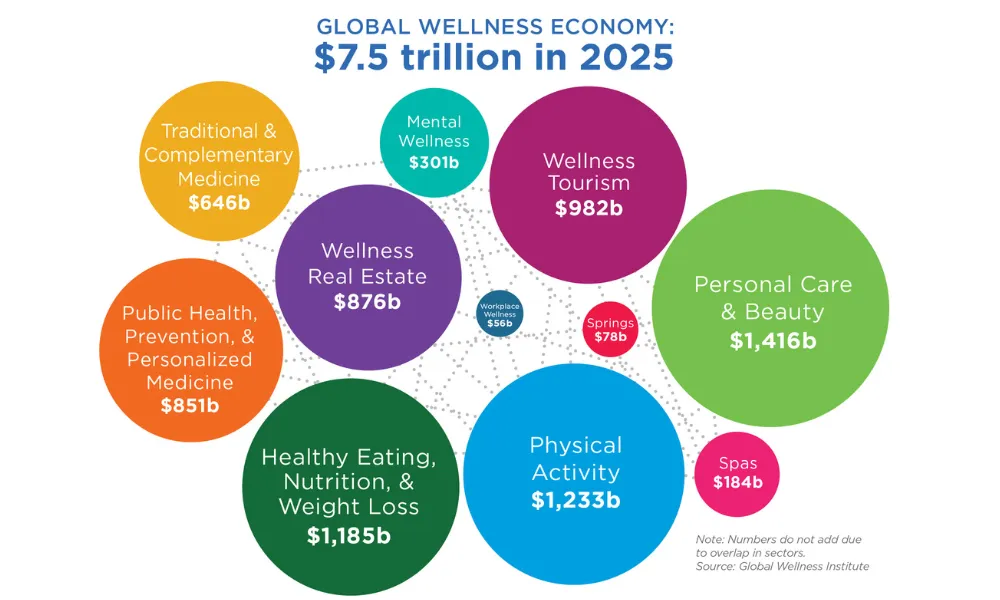
The comparisons with health and the wider economy are striking. Wellness spending now equals about 61% of total global health expenditure, and in 2025 it made up roughly 6.4% of global GDP.
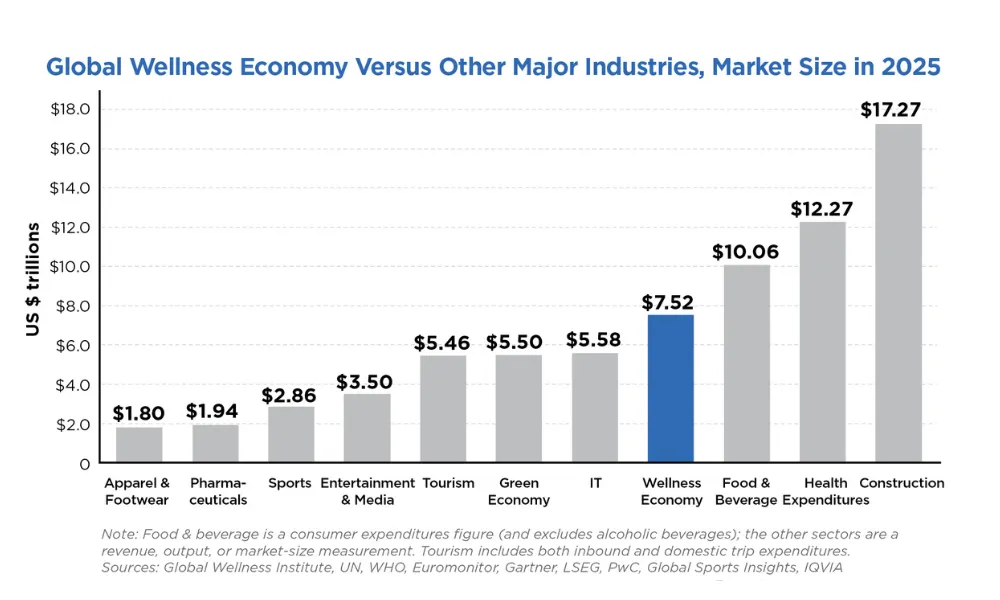
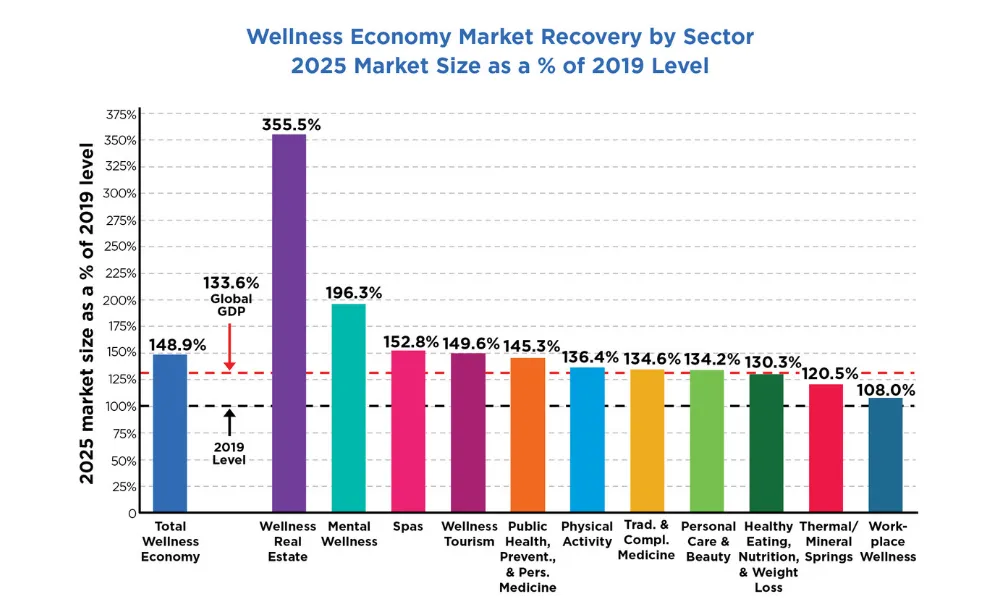 The three largest sectors are still personal care and beauty, healthy eating, and physical activity. Each has grown in its own way in recent years, shaped by the pandemic and by what it sells, who its customers are, and where they come from.
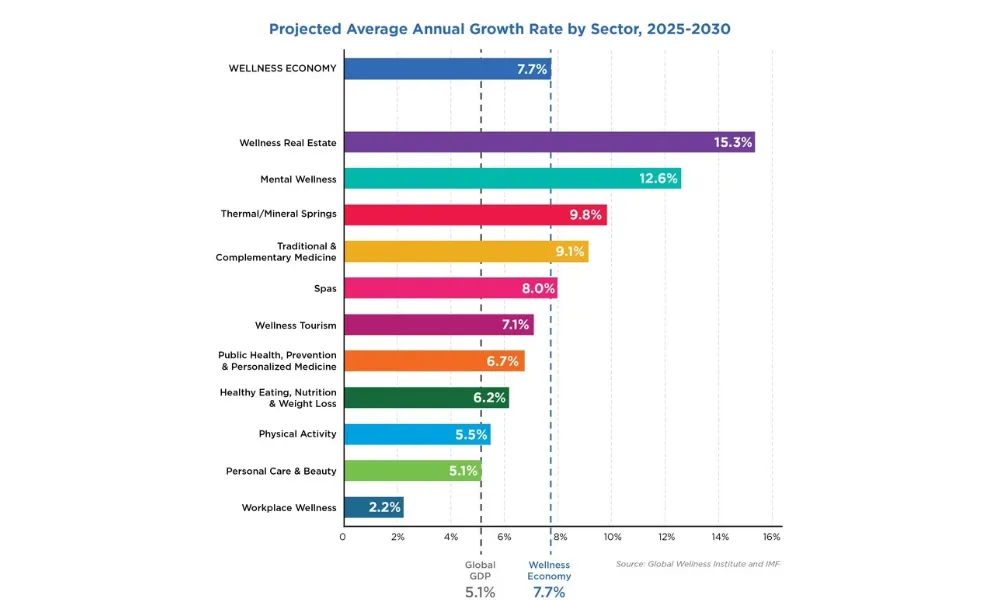 Looking ahead, GWI projects 7.7% annual growth for the wellness economy over the next five years. By 2030, seven of its eleven sectors are expected to pass $1 trillion USD. Wellness real estate stands out. It ranked fifth in size in 2025 and is forecast to become the second-largest sector within the next four years. Katherine was careful to add that these are forecasts. With so much volatility and uncertainty in the global economy, the numbers may change.
1. Silos vs. Synergies
The old boundaries are dissolving. Gyms are adding recovery and diagnostics, spas are moving into preventive health, and media and tech companies now stream fitness, meditation, and health tracking. Medicine and wellness, once seen as complementary but separate, are merging into hybrid medical-wellness models everywhere. The result is more competition, but also room for innovation and for reaching new populations.
2. Hard care vs. Soft Care
Katherine described wellness as a continuum running from ancient to modern, high-touch to high-tech:
• Hard care: data-driven, results-oriented wellness – longevity clinics, advanced diagnostics, biohacking and AI-powered optimization.
• Soft care: a pushback against hyper-optimization – nature, forest bathing, traditional healing, meditation, social bathing, and digital detox. Anti-tech, analog wellness is becoming a category of its own.
They look contradictory, but both come from the same impulse: people want more control over their health. Demand is growing at both ends and everywhere in between.
3. Lifespan vs. Healthspan
Longevity products have exploded, but many promises aren’t grounded in science. Katherine drew the key distinction between lifespan and healthspan: living longer versus living healthier for longer. Biomedical breakthroughs will come, but for now the fundamentals haven’t changed: movement, nutrition, sleep, stress management, social connection and healthy environments.
4. Self-Care vs. Collective Care
Modern wellness has focused on individual responsibility: eat better, exercise more, meditate, buy more products. Since the pandemic, though, we increasingly see that health is shaped by our surroundings – buildings, neighborhoods, access to nature and healthy food, working conditions, and the health of the planet. Individual choices and consumer spending can’t fix those, which is why wellness real estate, workplace wellness and wellness policy matter so much.
5. Premiumization vs. Democratization
As wellness goes mainstream, it is also splitting. At the top, it is more luxurious, personalized, high-tech, and expensive than ever – longevity diagnostics, wellness residences and retreats, premium beauty, exclusive clubs. But most people can’t afford these experiences, and premium offerings won’t move the needle on global health. The real challenge ahead is accessibility: digital services, public-private partnerships, affordable business models, public facilities and community programs.
Katherine closed by posing a set of hard questions to the industry:
• If people spend so much on wellness, why isn’t the world getting healthier?
• Is what we sell backed by evidence – or is it snake oil?
• Are we appropriating wellness traditions without sharing the credit or the gains?
• Do our own employees enjoy the wellness we sell to customers?
• Is wellness a privilege or a right?
• Are we just wellness industry leaders – or leaders in wellness?
Her call to action: grow the wellness economy not only in dollars but in impact, bringing more wellness to more people, especially the communities we aren’t reaching yet.
Connection in Motion
Luuk Melisse, Co-Founder, Sanctum, Netherlands
After the research presentations, the Summit moved from data to experience. Luuk Melisse, co-founder and creative visionary of Sanctum, the global mindful movement community, got the whole room on its feet. He started Sanctum to create human connection in a world dominated by disconnection and AI. Luuk led delegates through Sanctum’s mix of Kundalini yoga, martial arts, high-intensity movement, and breathwork, set to electronic music. People set an intention and calmed their nervous systems with the words ‘I am safe.’ They built up energy with the ‘Ha!’ mantra. Next, delegates turned to face each other, held hands and repeated affirmations. The session grew into a joyful group dance, with everyone invited up to the stage.
A Family’s Legacy of Care: Trisara, Tri Vananda & More
Moderated by: Amy McDonald, Founder & CEO, Under a Tree, United States
Participants:
Father: Narong Pattamasaevi, Founder & Chairman, Montara Hospitality Group, Thailand
Mother: Poonsri Pichayaphanich, Vice Chair, Niyom Pattamasaevi Foundation, Thailand
Son: Kittisak Pattamasaevi, President & CEO, Montara Hospitality Group, Thailand
 Tri Vananda began with a personal mission: helping to prevent Alzheimer’s disease, which still has no cure. The family’s answer is a way of life built on time in nature and healthy daily habits. Only 15% of the land has been developed, so the forest, farm, and lakes remain for residents and guests to enjoy. The same thinking shapes the food. PRU, the family’s restaurant at Trisara, now holds a Michelin star, which shows how far local, high-quality produce has come. Tri Vananda also supports the region’s farmers and markets, bringing the wider community together around a shared idea of wellbeing.
Authentic Expansion: Bringing Clinique La Prairie to Phuket
Simone Gibertoni, CEO, Clinique La Prairie, Switzerland
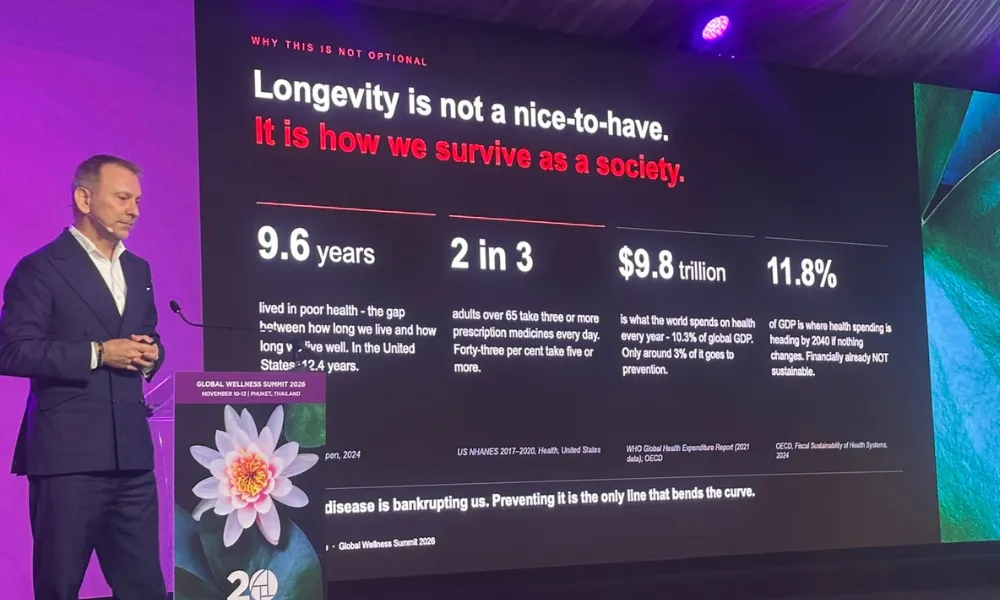 “Longevity is not a nice-to-have. It is how we survive as a society.” So argued Simone Gibertoni, CEO of Clinique La Prairie. We live 9.6 years in poor health (12.4 in the United States). Two in three adults over 65 take three or more prescription medicines daily. The world spends $9.8 trillion USD annually on health, 10.3% of global GDP, yet only about 3% goes to prevention. Spending is heading toward 11.8% of GDP by 2040 if nothing changes.
Simone said Clinique La Prairie’s ecosystem grew from four unmet needs: staying with clients 365 days a year, not just one week; places close to where they live, “because you need a human to change a human”; products that carry the science into everyday life; and innovation to keep that science moving. Hence: Health Resorts, Longevity Hubs, Holistic Health, and The Longevity Fund.
New destinations must pass three tests, in order: Market – demand for the services must be warranted; Place – where nature amplifies the medicine; and Partner – because “coherence cannot be licensed.” Tri Vananda in Phuket, with partner Montara, passed all three. Underpinning it all is an integrated process – diagnostics, intervention, and follow-up across medicine, nutrition, movement, and wellbeing, with a longevity mindset at the center.
Live Long & Prosper: Sorting Fact from Fantasy in Human Longevity
Kenneth R. Pelletier, MD, PhD, Clinical Professor of Medicine, Family and Community Medicine, and Psychiatry, University of California, San Francisco (UCSF); Chairman, American Health Association; United States
Kenneth R. Pelletier, MD, PhD, brought scientific rigor to the longevity conversation. He traced how public health, sanitation, nutrition, antibiotics, vaccines, and lifestyle change have lifted average life expectancy from around 40 years in 1800, and projections now exceed 100. He mapped the hallmarks of aging, from telomere shortening and inflammaging to mitochondrial dysfunction and ‘zombie’ cells, then highlighted biohacks, from rapamycin and young-blood transfusions to cold immersion, alongside the Mediterranean diet.
Of the many longevity pharmaceuticals and nutraceuticals, Kenneth said more than 40 have data from at least five human studies showing more benefit than risk for disability-free longevity. His caveats were sharp: animal studies and biochemical pathways do not equal human trials, a shifted biomarker does not mean better function, and interactions and side effects remain largely unknown. His Blue Zones “Divine Dozen” includes Mediterranean eating, daily movement, social bonds, and respected elders.
Health Optimization: Integrating Consumer-Led Health and Precision Geromedicine
Andrea Maier, MD, PhD, Director, NUS Academy for Healthy Longevity; Co-Founder, Chi Longevity, Singapore
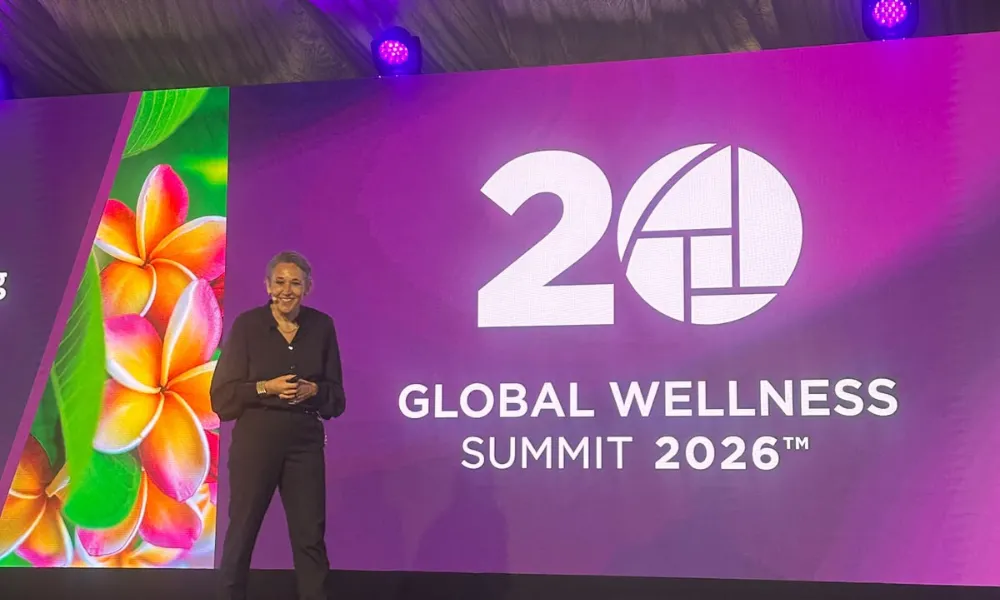 Andrea Maier highlighted that not everyone knows what wellness means, but they want to ‘feel better. Now.’ Rather than retreats or vacation-based wellness, Chi Longevity caters to a community of locals who receive diagnostic testing and guidance throughout their pursuit of wellness.
Andrea said, “Don’t die because of something silly!” Test the things you can manage and optimize those metrics. Precision geromedicine brings the science of healthy aging to patients. The goal for the next five years is to work with more countries to certify evidence-based care. Our industry has the solutions. Now we have to deliver them with rigor and make them a little less unsexy.
The Bennett Family Award for Collaboration in the Science of Wellness
Presented by: Bija Bennett, CEO, BijaB, United States
Award recipient: Andrea Maier, MD, PhD, Director, NUS Academy for Healthy Longevity; Co-Founder, Chi Longevity, Singapore
Changing the Game and Redefining Health
John Schoonbee, MD, Global Chief Medical Officer, Swiss Re, Switzerland
In Conversation with: Jiří Dvořák, MD, PhD, 2026 GWS Co-Chair; Professor of Neurology, Schulthess Clinic Zurich & BDMS Wellness Clinic; Former Chief Medical Officer, FIFA; Switzerland
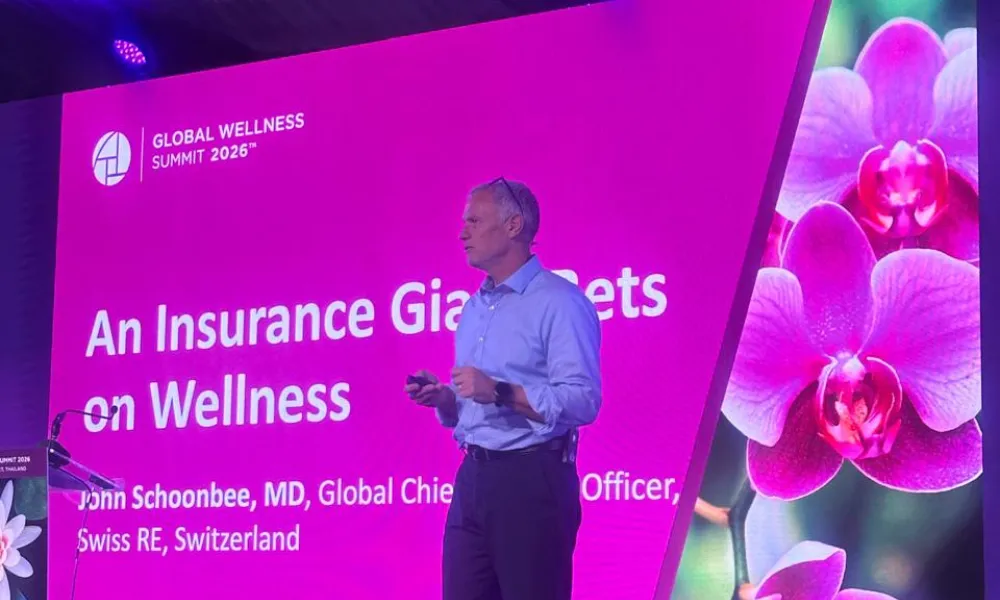 Swiss Re is one of the largest reinsurers in the world. John Schoonbee outlined why it makes sense that the companies that pay out for ill health should be motivated to improve the wellness and longevity of the global population. Jiří Dvořák proposed that John get all the heads of the major insurance companies to sit down with the leaders of the Global Wellness Summit to discuss the future of global health.
Blue Zones: I Built It, Sold It, and Bought It Back… What’s Next?
Dan Buettner, Founder, Blue Zones, United States
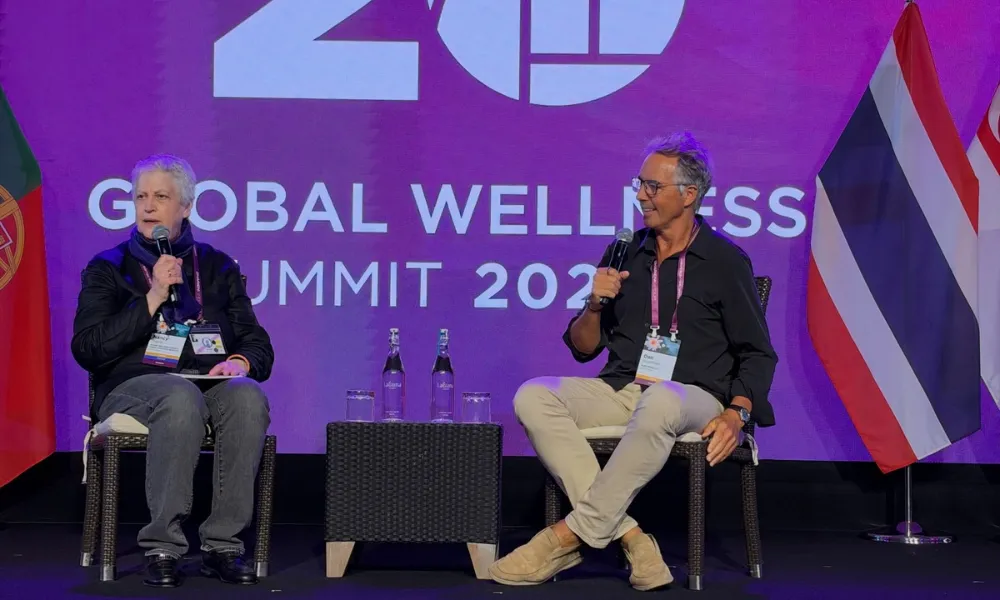 Blue Zones founder Dan Buettner argued that the world’s longest-lived people aren’t more disciplined than the rest of us. They live in environments that quietly nudge them toward better habits. That insight drives Blue Zones’ business model: insurers pay the company to enter cities for five years and lower healthcare costs by changing surroundings, not minds.
Three squads do the work. One helps city governments adopt policies that favor healthy food, walkers, cyclists, and non-smokers. A second certifies schools, restaurants, grocery stores, and workplaces, typically reaching about 40% of them. A third enrolls roughly 10% of residents in walking groups, cooking classes, and purpose workshops. Dan said the program has never failed to lower a city’s BMI, citing savings of about $250 million USD a year for a population of one million.
He championed ‘natural longevity’: gardening, family meals, and walking, which he said are backed by stronger evidence than peptides or stem cells.
Reframing Longevity: A Dynamic State of Everyday Health
George Gaitanos, PhD, Chief Operating and Scientific Officer, Chenot, Switzerland
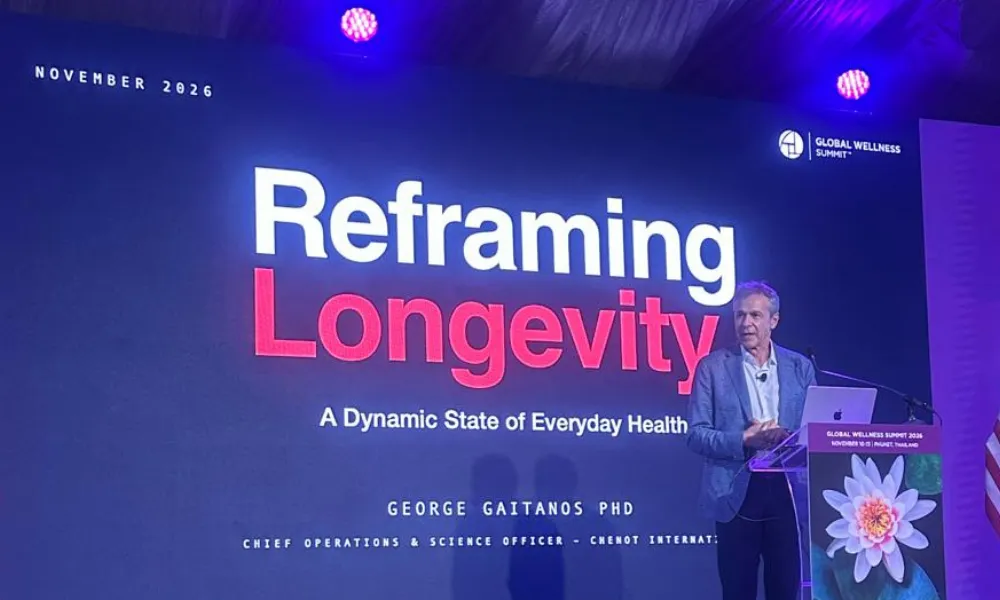 Health is more than the absence of disease, argued George Gaitanos. People don’t want a perfect lab result; they want energy, mobility, clarity, resilience, and the freedom to live independently. So the better question is not how to treat disease but how to create health, every day.
At the heart of his talk was capacity. Intrinsic capacity is the reserve we hold right now: strength, mobility, cognition, energy, and psychological stability. Adaptive capacity is how well we respond when life challenges us. Borrowing from exercise science, he showed that adaptation depends on stress, recovery, and frequency. Effort creates the demand, but recovery is where biology changes. Many people aren’t simply overworked; they’re under-recovered, and no supplement can fix that. Continuity matters more than intensity.
George also stressed that the body is one integrated system. Movement, food, sleep, light, relationships, and environment act on the whole, which is why single-metric thinking falls short when it comes to creating health. Personalization, he said, is a biological necessity: the right dose at the right time, adjusted through feedback across life stages and transitions. His vision? Longevity doctors as ‘architects of health’, helping people expand living, not just extend years.
The Architecture of Indifference: What Boring Buildings Are Doing to Us
Thomas Heatherwick, Founder & Design Director, Heatherwick Studio, United Kingdom
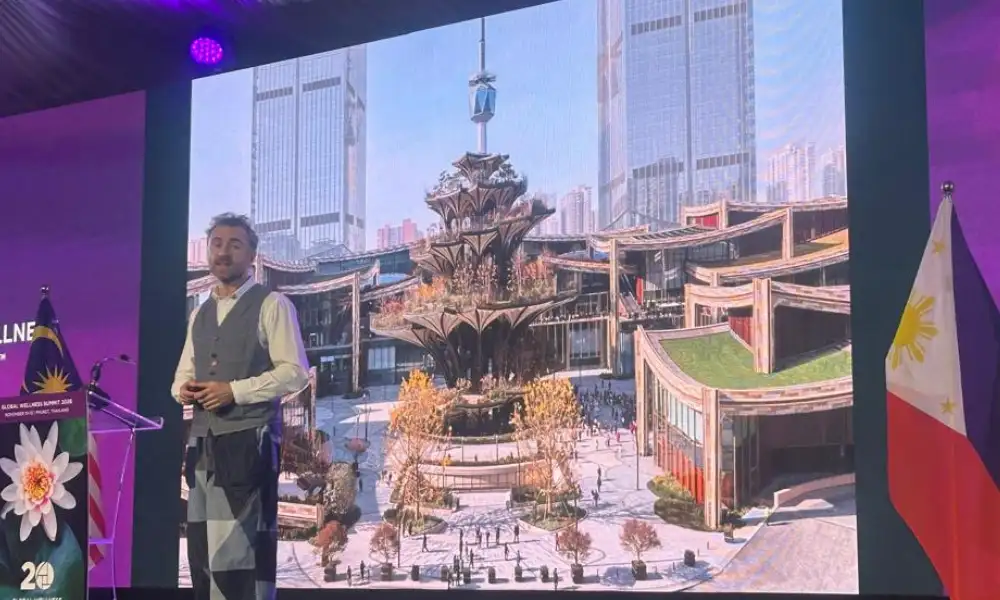 Thomas Heatherwick believes the places we build should make us healthier, and that most of them don’t. He has spent three decades leading a studio of 300 people. In his view, architecture has been treated as a lofty art form while everyday buildings have become plain, flat, shiny, anonymous, monotonous, and serious.
The issue is urgent. By 2050, 70% of the world’s population will live in cities that were never planned for it. Research shows our bodies respond to design. Eye-tracking of a three-month-old baby shows it ignoring plain facades and looking at visually complex ones. That response is innate, not learned, and boring environments can trigger stress in the brain. Thomas proposed treating buildings as nutrition, not just art, and no longer dismissing public dislike as ignorance.
There is a climate cost too. Society rarely repairs or adapts the boring buildings it doesn’t care about; it knocks them down. Thomas said the impact of that cycle is five times that of aviation, yet hardly anyone talks about it. For the wellness industry, the lesson is clear: healthy places must be lovable.
Selling the Glow: 20 Years of Advertising Wellness
Dave McCaughan, Founder, BIBLIOSEXUAL, Thailand
Veteran Asia-based marketing strategist Dave McCaughan traced how wellness advertising has evolved. Twenty years ago, brands like Kellogg’s sold wellness as fixing a problem; today the message is prevention. Next came holistic health and ‘natural’ buzzwords (clean eating, plant milks, celebrity skincare), alongside self-acceptance campaigns such as Dove’s Real Beauty Sketches and Shiseido’s provocative work in Japan. Technology followed, from apps and wearables to insurer-backed workplace movement programs and a 30-country HPV vaccination campaign starring real local people. The latest stage: functional products consumers will pay more for. His conclusion: wellness now lives in everyday choices.
By Sara Jones, Editor